Seven days of vegan meal prep can either feel reassuringly organized or like a refrigerator full of identical containers. The difference is not more cooking. It is a better framework: prepare a few adaptable protein-rich components, change the sauces and textures, and freeze the second half of the week before freshness begins to fade.
This one-week plan is designed for busy cooks who want easy vegan meal prep with meaningful protein. Main meals generally provide about 25–40 grams per serving, using tofu, tempeh, seitan, lentils, beans, edamame and chickpea pasta rather than relying on protein powder. Nutrition figures are estimates and will vary by product.
Experiment variants used: editorial guide structure; practical benefit headline; wider table-scene imagery; ingredient-story Pinterest composition; publication at 8:00 a.m. in the primary audience time zone.
Build the week around reliable plant protein
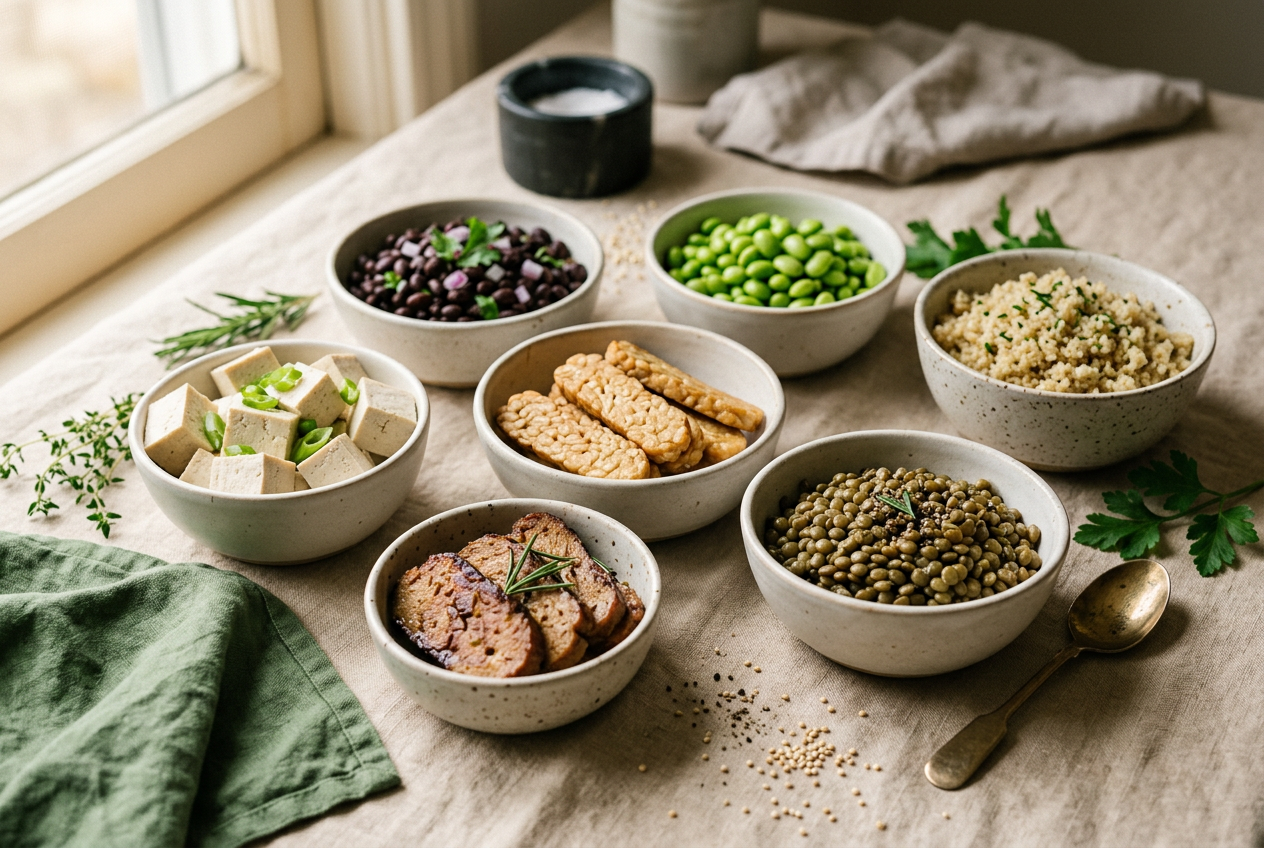
Protein needs are individual, but meal planning becomes easier when each main meal has a visible anchor. A practical target for this plan is roughly 25–40 grams per meal, distributed through the day rather than saved for dinner.
Soy foods are particularly efficient. A typical 200 g portion of extra-firm tofu supplies roughly 24–32 grams, while 150 g tempeh often provides about 28–30 grams. Seitan can contain around 30 grams per 100–120 g, though it is unsuitable for anyone avoiding gluten. Lentils and beans bring somewhat less protein by volume, but also provide fibre and slow-digesting carbohydrate.
A simple meal formula
- Protein: tofu, tempeh, seitan, lentils, beans or edamame.
- Supporting grain: quinoa, oats, chickpea pasta or whole-grain bread.
- Vegetables: at least two colours, roasted or kept crisp.
- Flavour: tahini, herbs, citrus, salsa, miso or peanut-lime sauce.
- Texture: pumpkin seeds, toasted chickpeas or shredded cabbage.
Protein figures differ across brands and portions. If intake matters for a training or health goal, calculate using the labels on the products you actually buy. A registered dietitian can help establish an appropriate personal target.
The streamlined grocery list
This list covers seven breakfasts, lunches and dinners for one adult, with intentional leftovers and repeated ingredients. Scale quantities for household size and appetite. Pantry staples are listed separately so the fresh shop stays manageable.
Fresh and refrigerated
- Proteins: 800 g extra-firm tofu, 400 g tempeh, 400 g seitan, 750 ml unsweetened fortified soy milk.
- Produce: 2 broccoli crowns, 3 bell peppers, 2 red onions, 2 sweet potatoes, 250 g mushrooms, 1 small cabbage, 1 cucumber, 300 g spinach, 4 lemons, 2 limes, garlic, ginger, parsley and coriander.
- Fruit: 500 g frozen berries, 3 bananas and 2 apples.
Dry, canned and frozen
- 500 g rolled oats, 300 g quinoa and 250 g chickpea pasta.
- 2 cans chickpeas, 2 cans black beans and 2 cans chopped tomatoes.
- 2 cups cooked lentils or 2 cans, drained; 500 g frozen shelled edamame.
- Chia seeds, hemp hearts, pumpkin seeds and natural peanut butter.
Pantry flavour
- Tahini, soy sauce or tamari, maple syrup, vegetable stock and olive oil.
- Smoked paprika, cumin, chilli powder, oregano, turmeric, nutritional yeast, salt and black pepper.
For a budget high-protein vegan meal prep, use dry lentils and beans, choose frozen edamame and vegetables, and replace half the seitan with extra lentils. Buying only two fresh herbs also limits waste.
A focused Sunday prep session
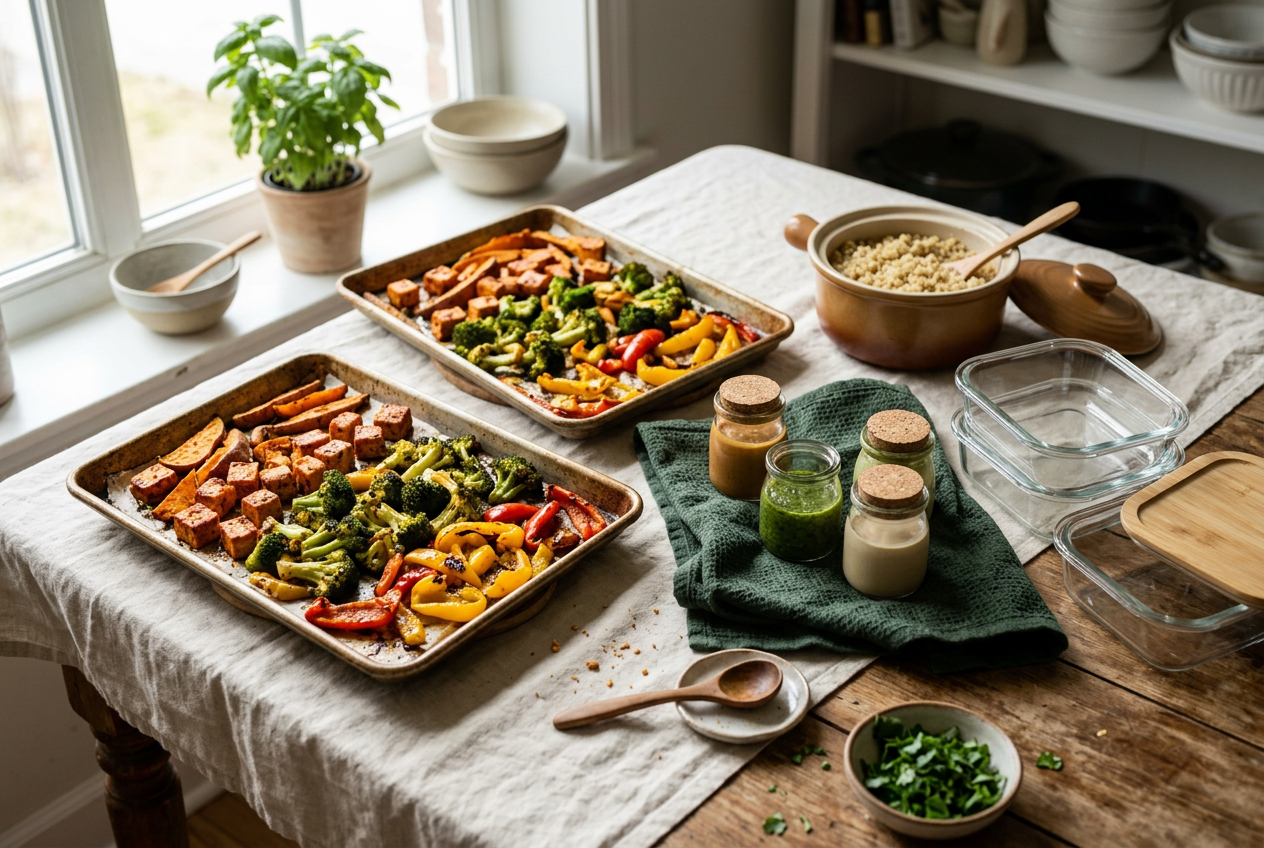
Allow about two hours, including cooling and washing up. The most efficient sequence begins with the longest passive jobs, then uses oven time for sauces and breakfast jars.
- 0–15 minutes: Heat the oven to 220°C/425°F. Start the quinoa and a pot of lentils if using dry. Press tofu briefly between clean towels; prolonged pressing is unnecessary for extra-firm tofu.
- 15–30 minutes: Chop broccoli, peppers, onions, sweet potatoes and mushrooms. Roast the firmer vegetables for 25–35 minutes, adding broccoli or peppers later if cut small.
- 30–50 minutes: Season one tray of tofu with soy sauce, smoked paprika and nutritional yeast. Bake for 25–30 minutes, turning once. Sear tempeh or seitan in a skillet for crisp edges.
- 50–70 minutes: Make lemon-tahini sauce, peanut-lime sauce and a quick herb salsa. Keep sauces looser than usual because they thicken when chilled.
- 70–90 minutes: Assemble three jars of berry chia overnight oats. Wash and dry cabbage, cucumber and herbs, but store them apart from hot components.
- 90–120 minutes: Portion meals for days one to four. Cool cooked food in shallow containers, then seal and refrigerate. Freeze meals for days five to seven as soon as they are cool.
Label containers with the meal and date. Sauces, seeds and herbs belong in separate small containers; that single habit preserves contrast between creamy, crisp and tender elements.
Seven days of breakfasts, lunches and dinners
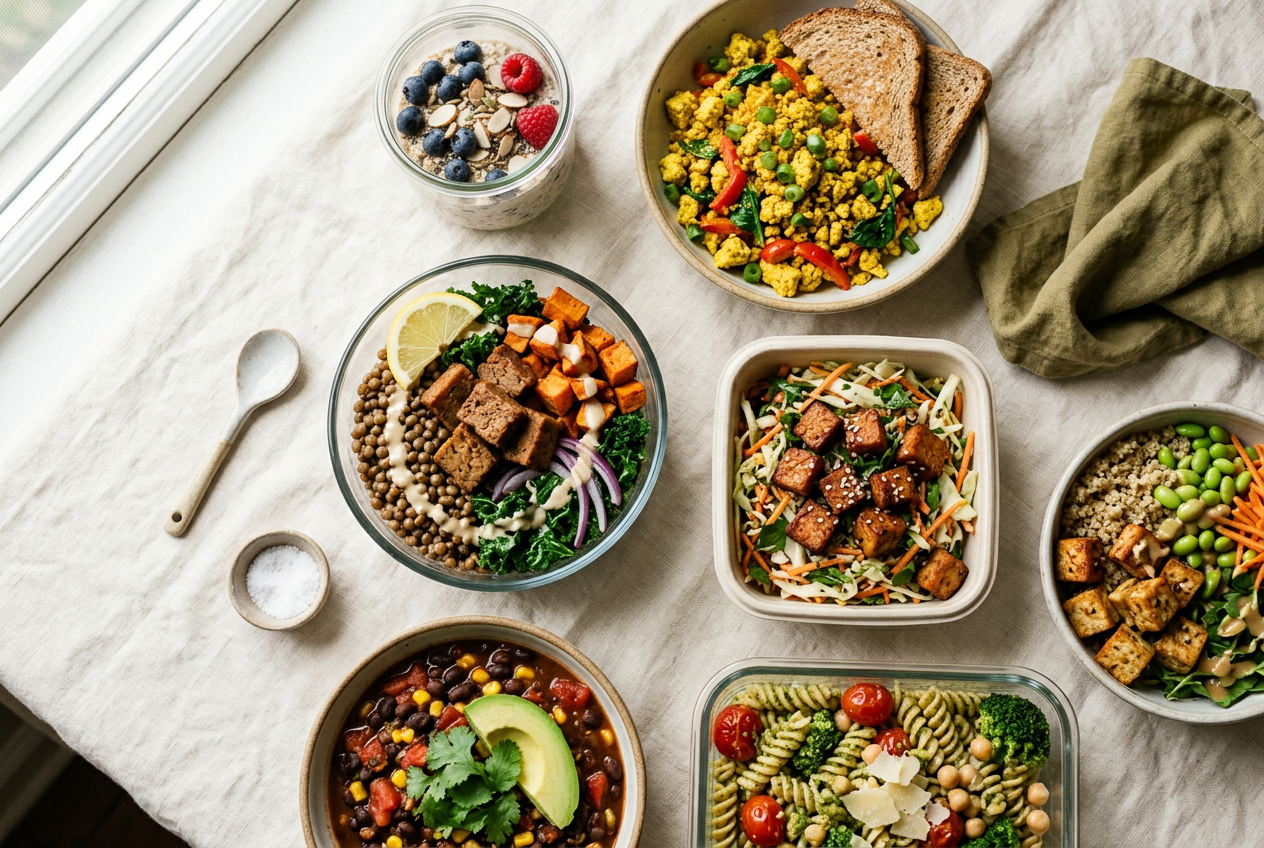
The plan repeats components, not complete meals. Estimated protein values use common products and rounded portions; check labels for precision. Snacks can include roasted chickpeas, apple with peanut butter, soy yogurt with hemp hearts or steamed edamame.
Day 1
- Breakfast: Berry chia overnight oats with soy milk and hemp hearts, about 27 g protein.
- Lunch: Lemon-tahini lentil and seitan bowl, about 38 g.
- Dinner: Smoky tofu, quinoa and roasted broccoli bowl with herb salsa, about 35 g.
Day 2
- Breakfast: Tofu scramble with mushrooms, spinach and whole-grain toast, about 32 g.
- Lunch: Peanut-lime tempeh slaw with quinoa, about 36 g.
- Dinner: Black bean and sweet potato chilli topped with pumpkin seeds, about 27 g.
Day 3
- Breakfast: Berry chia overnight oats with sliced banana, about 27 g.
- Lunch: Lemon-tahini lentil and seitan bowl, about 38 g.
- Dinner: Chickpea pasta with tomato-lentil sauce and spinach, about 34 g.
Day 4
- Breakfast: Tofu scramble folded into a whole-grain wrap, about 31 g.
- Lunch: Smoky tofu quinoa bowl with crunchy cabbage, about 35 g.
- Dinner: Tempeh, edamame and vegetable stir-fry, about 39 g.
Day 5
- Breakfast: Berry chia overnight oats with peanut butter, about 29 g.
- Lunch: Thawed lentil-seitan bowl with fresh parsley, about 38 g.
- Dinner: Black bean chilli over quinoa, about 30 g.
Day 6
- Breakfast: Reheated tofu scramble with toast and tomato, about 32 g.
- Lunch: Chickpea pasta and edamame salad with lemon-tahini dressing, about 33 g.
- Dinner: Thawed tofu and roasted vegetable bowl with peanut-lime sauce, about 35 g.
Day 7
- Breakfast: Warm oats with soy milk, chia, hemp hearts and peanut butter, about 28 g.
- Lunch: Tempeh slaw wrap with edamame, about 36 g.
- Dinner: Flexible freezer bowl using remaining quinoa, legumes, vegetables and sauce, about 30–38 g.
Core recipe: lemon-tahini lentil and seitan bowls
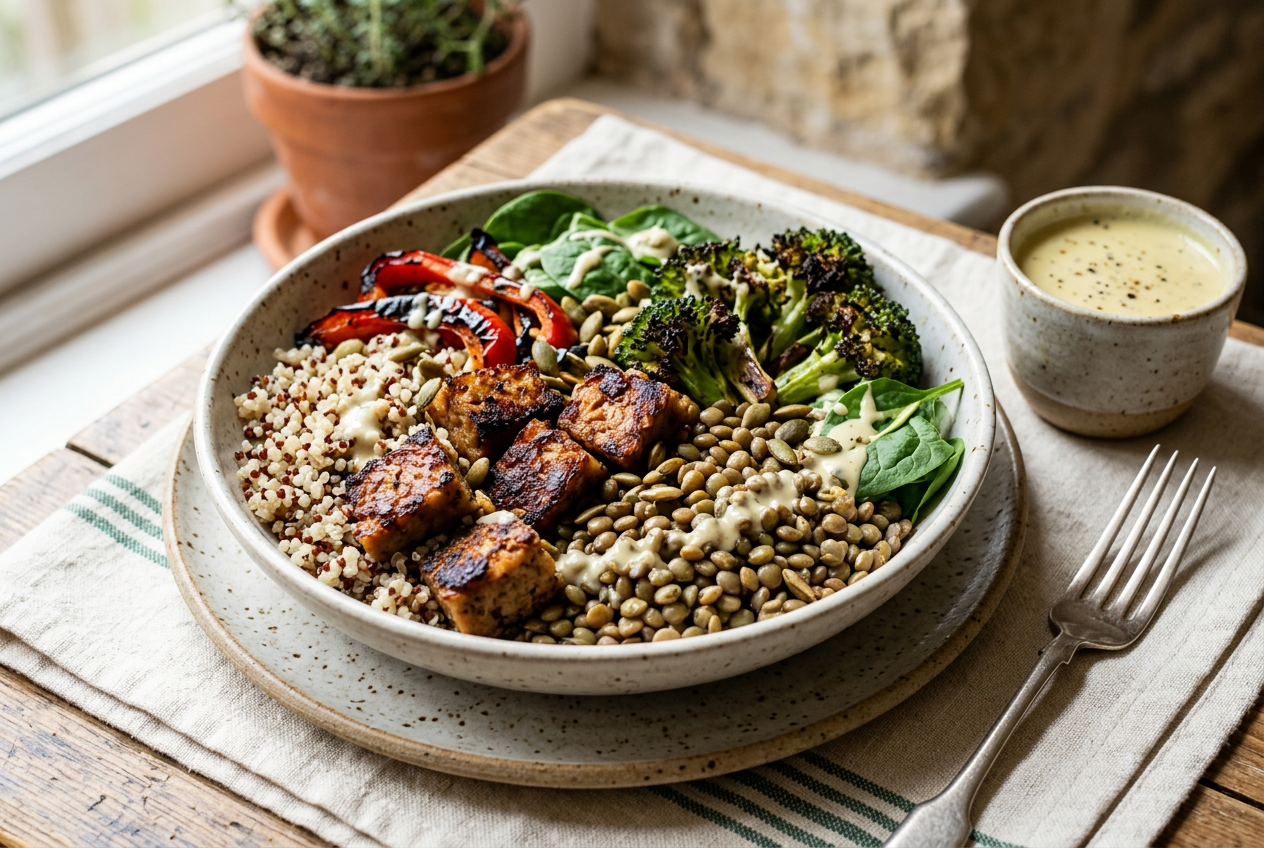
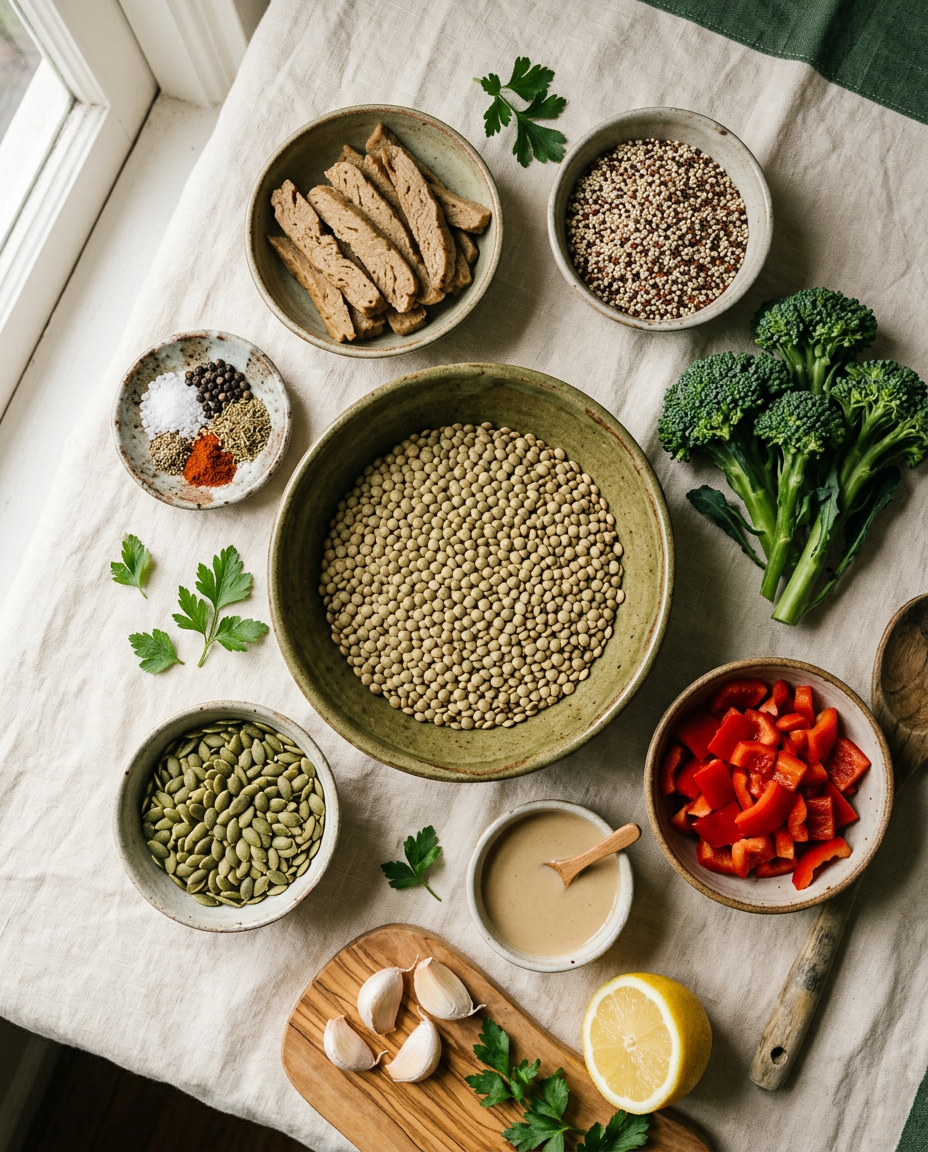
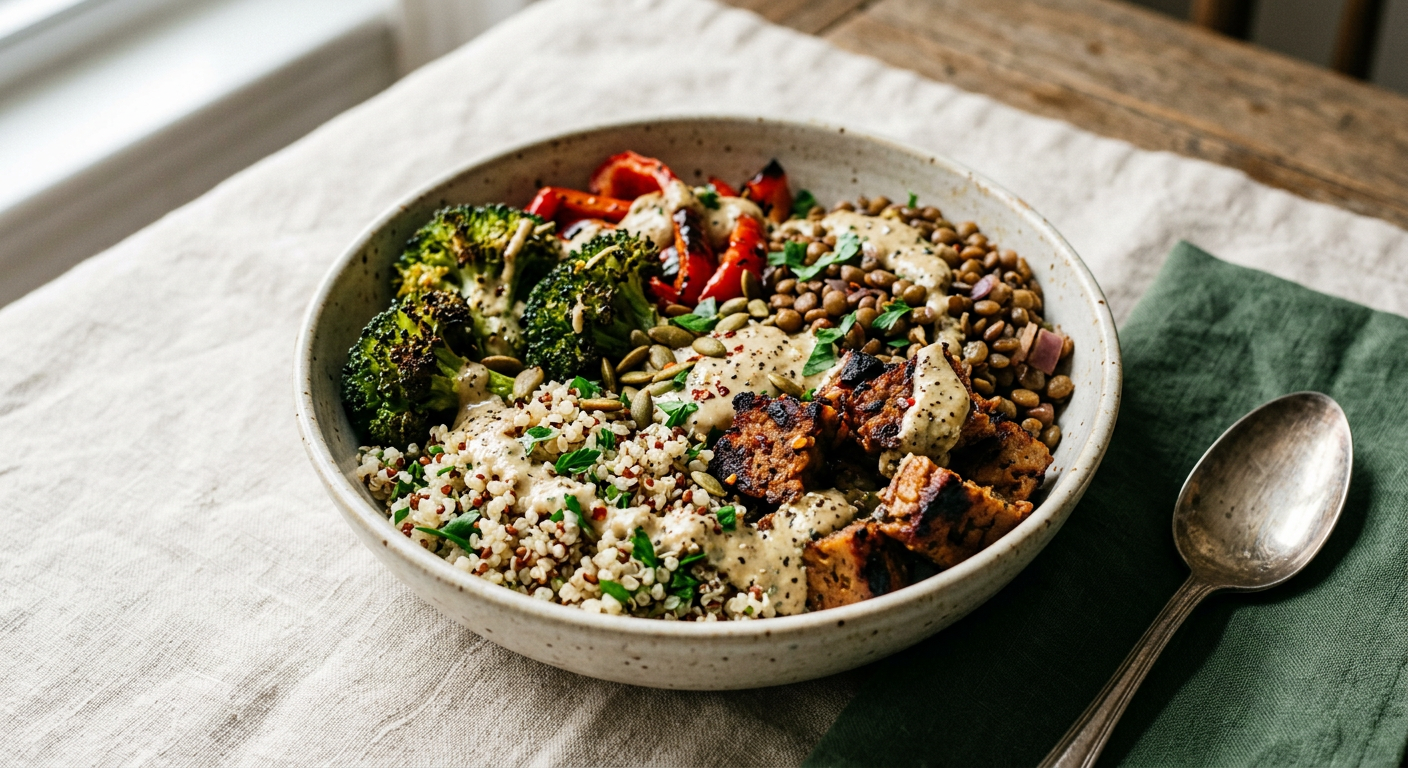
This is the structural centre of the week: nutty quinoa, earthy lentils, crisp-edged seitan and vegetables roasted until their edges darken. Lemon-tahini sauce gives the bowl acidity and richness without masking the cumin and smoked paprika beneath it.
The recipe makes six servings, enough for several lunches or for two people across three days. It provides approximately 38 grams of protein per serving and needs 20 minutes of preparation plus 55 minutes of cooking.
Technique that improves the result
- Rinse quinoa: a thorough rinse removes its naturally bitter surface compounds.
- Let steam escape: uncover cooked quinoa after its resting time so it cools into separate grains.
- Sear in a broad pan: seitan browns best when pieces touch the skillet rather than one another.
- Thin tahini gradually: it may tighten at first when lemon is added, then become silky as warm water is whisked in.
Adjust the plan for budget, training or allergies
Meal prep should flex around the person eating it. Keep the basic plate structure, then alter portions and protein choices rather than rebuilding every recipe.
For muscle gain
Retain the full protein serving and increase energy with more quinoa, oats, whole-grain bread, tahini or nut butter. A post-training snack of soy yogurt, berries and hemp hearts can add protein and carbohydrate with little preparation. Building muscle also requires progressive resistance training and adequate total energy.
For weight management
Protein and fibre can support fullness, but no individual meal guarantees weight loss. Fill more of the container with non-starchy vegetables, measure calorie-dense sauces, and keep the tofu, tempeh, legumes or seitan portion intact. Avoid cutting meals so sharply that hunger simply shifts to later in the day.
Without protein powder
This plan does not require it. Fortified soy milk, tofu, tempeh, legumes, seitan, edamame and chickpea pasta can build meals in the 25–40 gram range. Protein powder remains an optional convenience, not a nutritional requirement.
Soy-free or gluten-free
For soy-free meals, replace tofu and tempeh with seitan when gluten is suitable, or use extra lentils, chickpeas and beans. For gluten-free meals, replace seitan with tofu or edamame and choose certified gluten-free oats and tamari. Anyone managing an allergy should verify every packaged ingredient for cross-contact.
Storage and reheating through day seven
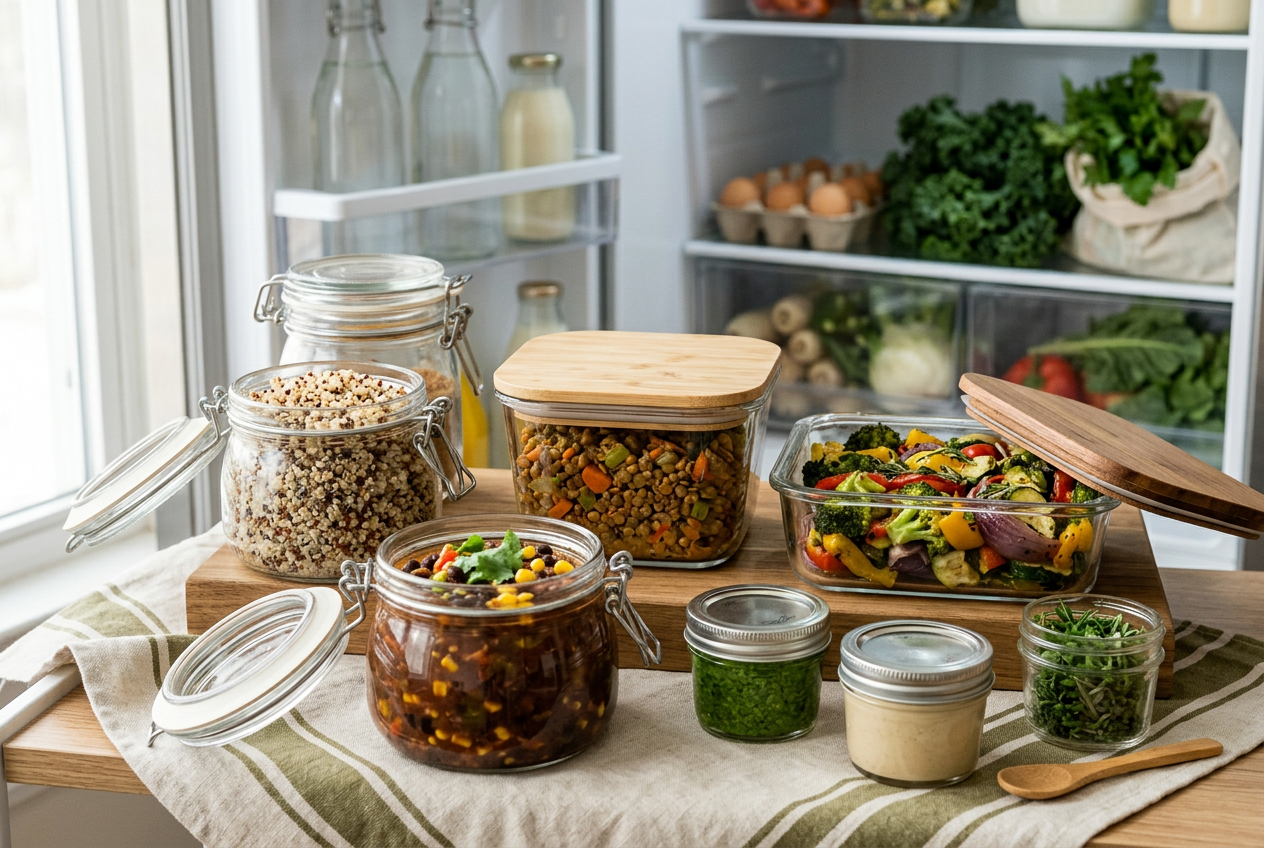
A full week of cooked food should not spend a full week in the refrigerator. Most prepared dishes are best refrigerated for three to four days at 4°C or colder. Freeze the portions for days five through seven on Sunday rather than waiting until day four.
What to refrigerate
- Overnight oats for up to three to four days.
- Tofu scramble, cooked grains, roasted vegetables, lentils and seitan for three to four days.
- Tahini and peanut sauces for up to five days, stored separately.
- Washed slaw vegetables and herbs in dry, lined containers.
What to freeze
- Quinoa bowls, chilli and tomato-lentil sauce for up to two to three months for best quality.
- Cooked tofu, seitan and tempeh; expect tofu to become slightly chewier after freezing.
- Do not freeze cucumber, fresh slaw, herbs or fully assembled overnight oats.
Thaw a frozen meal overnight in the refrigerator. Reheat in a covered microwave-safe dish, stirring midway, or in a skillet with a tablespoon of water. Heat until steaming throughout. Cooked food should be refrigerated within two hours, and leftovers should not be repeatedly warmed and cooled.
Lemon-tahini lentil and seitan meal-prep bowls
Ingredients
- 1 1/2 cups dry quinoa, rinsed
- 3 cups water or low-sodium vegetable stock
- 2 cups cooked green or brown lentils, drained well
- 400 g seitan, cut into bite-size strips
- 2 medium broccoli crowns, cut into small florets
- 2 red bell peppers, sliced
- 1 large red onion, cut into wedges
- 2 tablespoons olive oil
- 1 teaspoon smoked paprika
- 1 teaspoon ground cumin
- 3/4 teaspoon fine sea salt, divided
- 1/2 teaspoon black pepper
- 1/3 cup tahini
- Juice of 1 large lemon
- 1 small garlic clove, finely grated
- 1–2 teaspoons maple syrup
- 4–6 tablespoons warm water
- 1/4 cup pumpkin seeds
- 1/2 cup chopped parsley
Method
- Heat the oven to 220°C/425°F. Line two large sheet pans. Keep the vegetables in a single layer so they roast rather than steam.
- Bring the quinoa and water or stock to a boil. Cover, reduce to low and cook for 15 minutes. Remove from the heat, leave covered for 10 minutes, then fluff with a fork and cool uncovered.
- Toss the broccoli, peppers and onion with 1 tablespoon olive oil, paprika, cumin, 1/2 teaspoon salt and black pepper. Roast for 22–28 minutes, rotating the pans halfway, until browned at the edges.
- Heat the remaining oil in a wide skillet over medium-high heat. Sear the seitan for 6–8 minutes, turning occasionally, until crisp at the edges. Fold in the lentils and warm for 2 minutes.
- Whisk tahini, lemon juice, garlic, maple syrup and remaining salt. Add warm water one tablespoon at a time until the sauce falls from a spoon in a thick ribbon.
- Divide quinoa, roasted vegetables and the lentil-seitan mixture among six containers. Cool before sealing. Pack the sauce, pumpkin seeds and parsley separately; add after reheating.
Nutrition (per serving)
- Calories Approximately 620 kcal
- Protein Approximately 38 g
- Carbohydrates Approximately 82 g
- Fat Approximately 19 g
- Fibre Approximately 16 g
Cooking tips
- For the best texture, refrigerate three portions and freeze three portions without sauce or fresh herbs.
- Seitan sodium varies considerably. Use low-sodium stock and adjust the added salt after checking the package.
- For a gluten-free bowl, replace seitan with 600 g extra-firm tofu or 3 cups shelled edamame; protein totals will change.
- To increase energy for muscle-gain goals, add another 1/2 cup cooked quinoa, avocado or a whole-grain flatbread. For a lighter plate, reduce quinoa slightly and add leafy vegetables while retaining the full protein portion.
Frequently asked questions
How can a vegan get 100 grams of protein a day?
Yes. Three meals containing about 30 grams each, plus a snack with 10–15 grams, can provide roughly 100 grams of protein. The exact amount you need depends on body size, activity, age and health. Soy foods, seitan, lentils, beans, quinoa and fortified soy milk make that target easier without requiring protein powder.
What vegan meal has the most protein?
Meals combining seitan or tempeh with lentils, beans or edamame are among the most protein-dense whole-food options. The lentil-seitan bowls in this plan provide about 38 grams per serving. Protein content varies by brand, so check package labels when tracking closely.
How do vegans meal prep for a week?
Choose two batch-cooked proteins, one grain, several roasted vegetables and two or three sauces. Refrigerate meals for the first three to four days and freeze later portions immediately. Prepare delicate toppings, such as herbs and cucumber, separately.
Is 30 grams of protein per meal enough?
For many adults, 30 grams at each main meal is a practical way to distribute protein across the day. Individual needs differ, particularly for athletes, older adults, pregnant people and anyone with a medical condition, so personalized advice should come from a qualified dietitian or clinician.
What are the best plant-based protein sources for meal prep?
Tofu, tempeh, seitan, lentils, chickpeas, black beans, edamame, textured vegetable protein and quinoa all hold up well in prepared meals. Soy milk, chia seeds and hemp hearts are especially useful for make-ahead breakfasts.
How long does vegan meal prep last in the fridge?
Most cooked vegan meal-prep dishes keep for three to four days at 4°C or colder. Freeze portions intended for days five through seven on prep day, then thaw overnight in the refrigerator. Refrigerate cooked food within two hours and reheat hot meals until steaming throughout.
Cook beyond the prep plan. The PlantedAndSimple digital cookbook brings together composed, protein-conscious plant-based recipes with clear methods and practical variations for weeknight cooking. Browse it when you want a wider rotation without a longer ingredient list.
Final thoughts
A useful meal-prep plan should reduce decisions without making every day taste the same. Here, one pot of lentils, two trays of vegetables, cooked quinoa and three distinct sauces become seven days of substantial breakfasts, lunches and dinners.
Use the portions as a starting point. Add grains, bread or another snack when energy needs are higher; increase vegetables and keep the protein portions steady when a lighter plate suits you. Most importantly, freeze the later meals on prep day. That small step keeps texture and flavour intact through day seven.