A good high-protein vegan dinner should do more than meet a number. It should feel complete: a crisp edge against something creamy, a sauce with depth, vegetables cooked with care and enough substance to carry you comfortably through the evening.
The 25 recipes below span quick noodles, slow-simmered stews, pasta, curries, bowls and tray bakes. Estimated protein ranges from 22 to 42 grams per serving, using tofu, tempeh, seitan, lentils, beans, edamame, peas and protein-rich pasta rather than protein powder. Exact values will vary with brands and serving sizes.
For most adults, protein needs depend on body size, age and activity level. Rather than treating one dinner as a test, aim for varied protein-rich foods throughout the day. This collection is designed for practical meal planning, not individual medical nutrition advice.
The anatomy of a satisfying high-protein vegan dinner
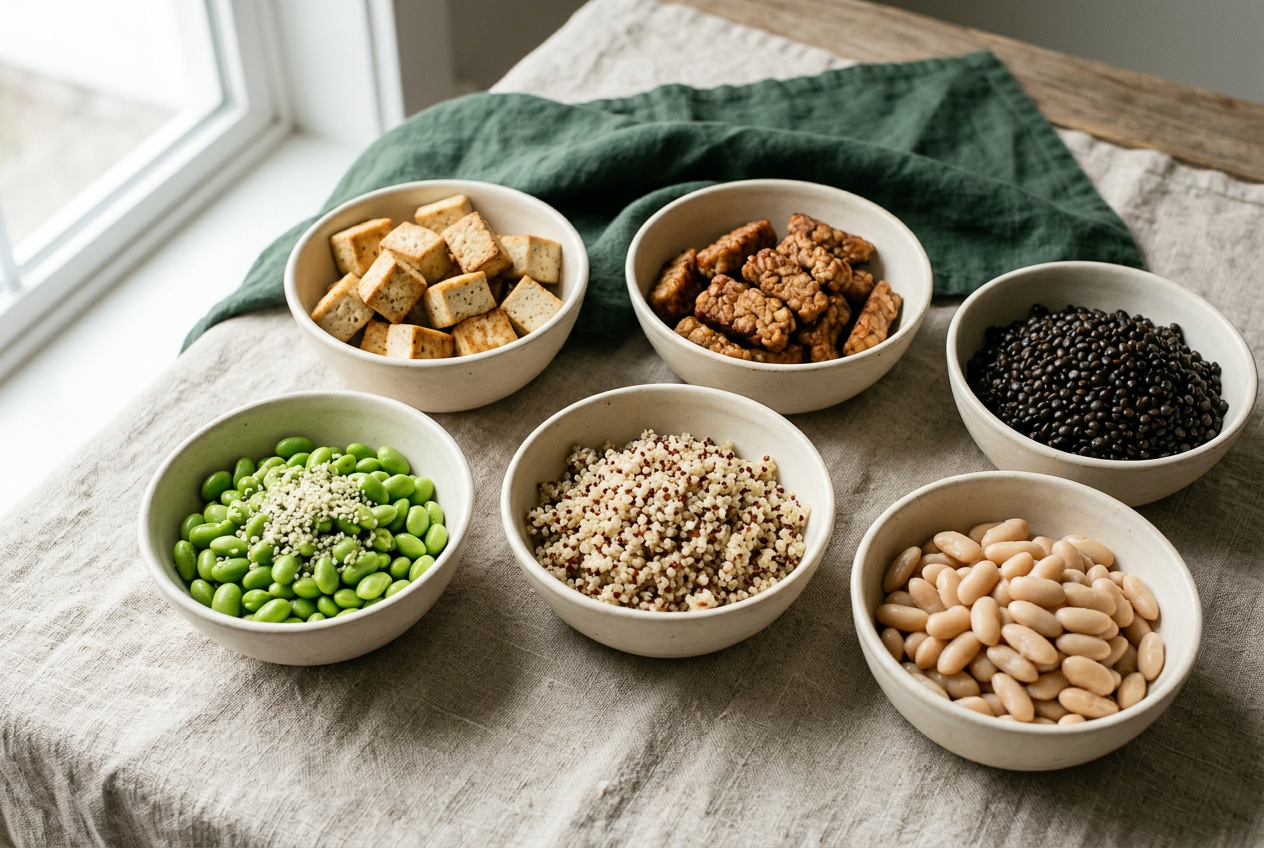
The strongest plant-based dinners are layered rather than built around a single protein source. Begin with one concentrated anchor: 150–200 grams of tofu or tempeh, 100–150 grams of seitan, 40–60 grams of dry textured vegetable protein, or a generous serving of legume pasta. Then add beans, peas, edamame or a whole grain where the dish allows.
A useful dinner target for many readers is 20–35 grams of protein, although individual needs vary. The following structure usually reaches that range without protein powder:
- Protein anchor: tofu, tempeh, seitan, lentils, beans or textured vegetable protein.
- Supporting carbohydrate: quinoa, brown rice, buckwheat, whole-wheat bread or legume pasta.
- Two vegetables: one substantial, such as broccoli or mushrooms, and one fresh or leafy.
- Finishing sauce: tahini, peanut, cashew, miso or herb dressing, sharpened with citrus or vinegar.
Texture matters as much as arithmetic. Roast tofu until its corners darken, fry tempeh before glazing it and let mushrooms lose their water before seasoning. A crisp, chewy or caramelised element keeps a protein-rich plate from feeling dutiful.
Tofu, tempeh and seitan dinners
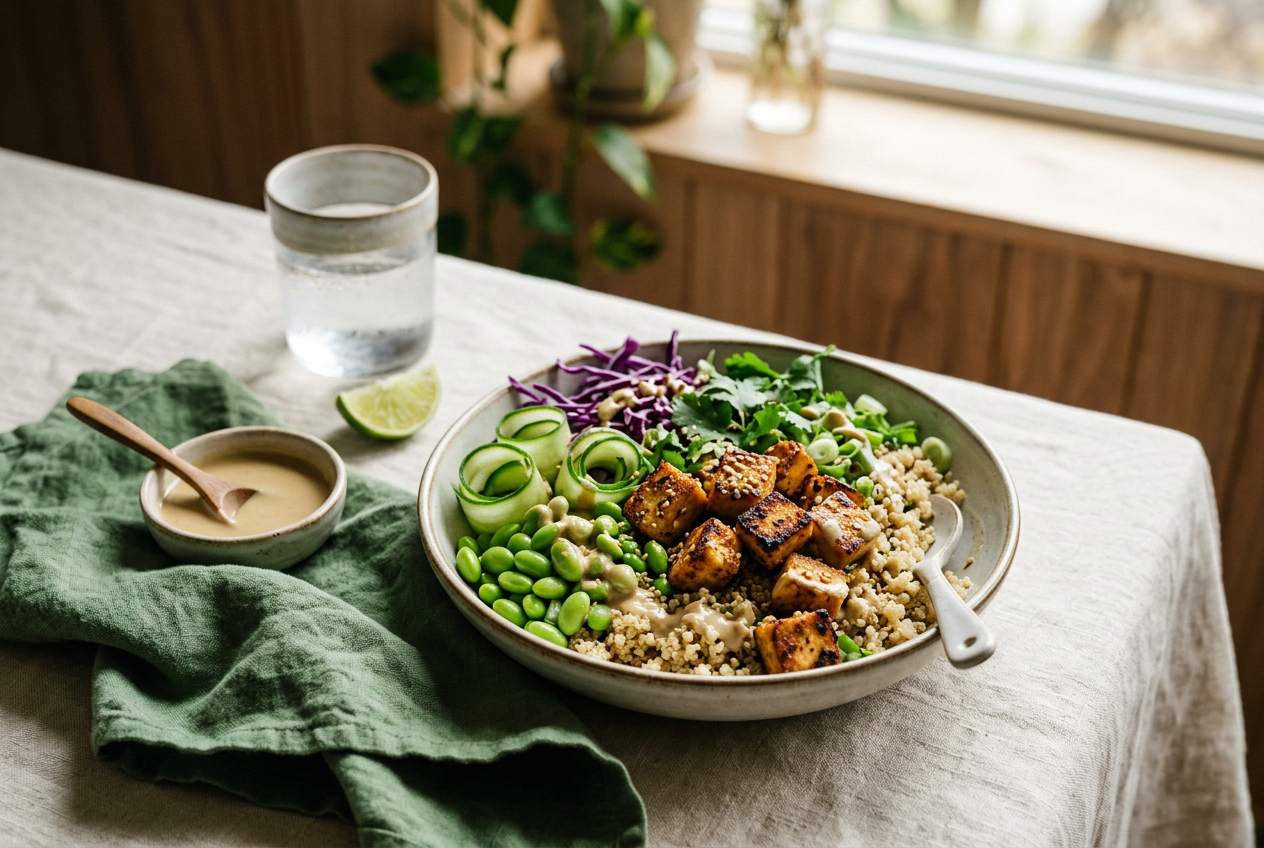
1. Crispy tofu, edamame and quinoa bowls — 32 g protein, 35 minutes. Coat pressed tofu in tamari and cornflour, then roast at 220°C until blistered. Serve over quinoa with shelled edamame, cucumber, shredded cabbage and a ginger-lime tahini dressing.
2. Smoky tempeh and black lentil bowls — 35 g protein, 40 minutes. Steam tempeh for 8 minutes to soften its bitterness, then sear with smoked paprika, maple and tamari. Spoon it over peppery black lentils with roasted broccoli and lemony parsley sauce.
3. Seitan pepper stir-fry with brown rice — 42 g protein, 25 minutes. Brown thinly sliced seitan before adding red peppers, mangetout and spring onion. A glossy sauce of black pepper, soy, rice vinegar and toasted sesame oil supplies the savoury edge.
4. Harissa tofu with chickpea couscous — 30 g protein, 30 minutes. Brush tofu slabs with harissa and lemon, then roast beside courgette and red onion. Fold chickpeas, herbs and toasted almonds through whole-wheat couscous.
5. Tempeh peanut noodles with greens — 34 g protein, 25 minutes. Crumble tempeh into a hot pan until deeply bronzed. Toss with buckwheat noodles, pak choi and a peanut sauce loosened with lime and noodle water.
6. Tofu tikka tray bake with peas — 31 g protein, 45 minutes. Marinate tofu in unsweetened soy yoghurt, garam masala, garlic and ginger. Roast with cauliflower and tomatoes, then fold peas through for the final 5 minutes.
Lentil, bean and chickpea dinners without tofu
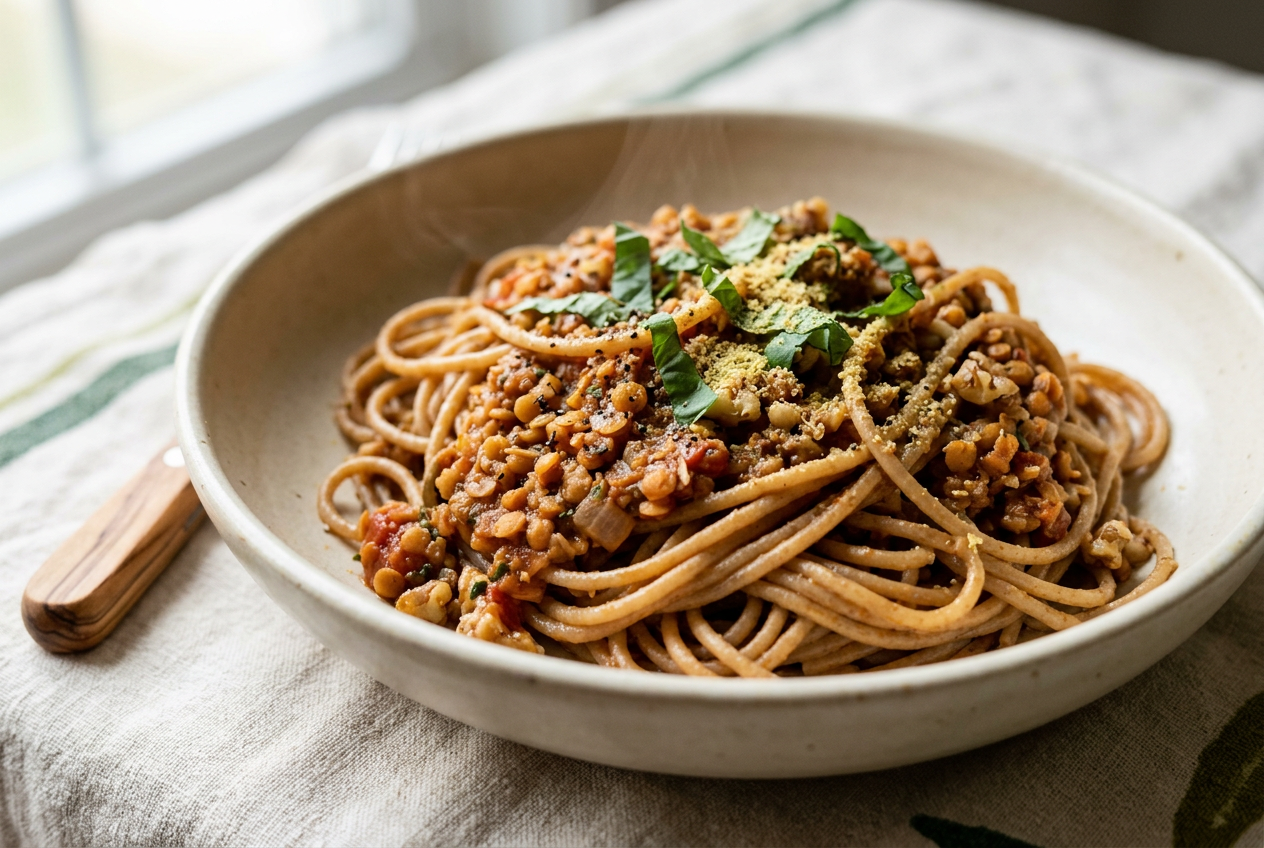
7. Red lentil and walnut bolognese — 27 g protein, 45 minutes. Sweat onion, carrot and celery slowly, then add tomato paste and cook until brick red. Red lentils melt into the sauce while chopped walnuts retain a pleasing bite. Serve with whole-wheat spaghetti.
8. Chickpea and spinach coconut curry — 23 g protein, 35 minutes. Bloom cumin, coriander and turmeric in oil, add chickpeas and tomatoes, then simmer with light coconut milk. Stir in spinach and green peas at the end; serve with quinoa rather than white rice for more protein.
9. White bean, kale and farro stew — 25 g protein, 50 minutes. Simmer cannellini beans and chewy farro in rosemary-scented stock. Mash a ladleful against the pan to thicken the broth, then add kale and lemon.
10. Black bean and quinoa stuffed peppers — 24 g protein, 50 minutes. Pack halved peppers with black beans, quinoa, corn, pumpkin seeds and chipotle tomato sauce. Bake covered until tender, then uncover to concentrate the top.
11. Green lentil shepherd's pie — 26 g protein, 60 minutes. Cook mushrooms until their moisture evaporates before adding lentils, thyme and peas. Crown with a mash of potatoes and white beans, then bake until the ridges turn golden.
12. Butter bean puttanesca with grilled sourdough — 22 g protein, 30 minutes. Simmer butter beans in a sharp tomato sauce with capers, olives, garlic and chilli. Whole-grain sourdough makes the sauce-sweeping portion of dinner more substantial.
Protein-packed vegan pasta and noodle recipes
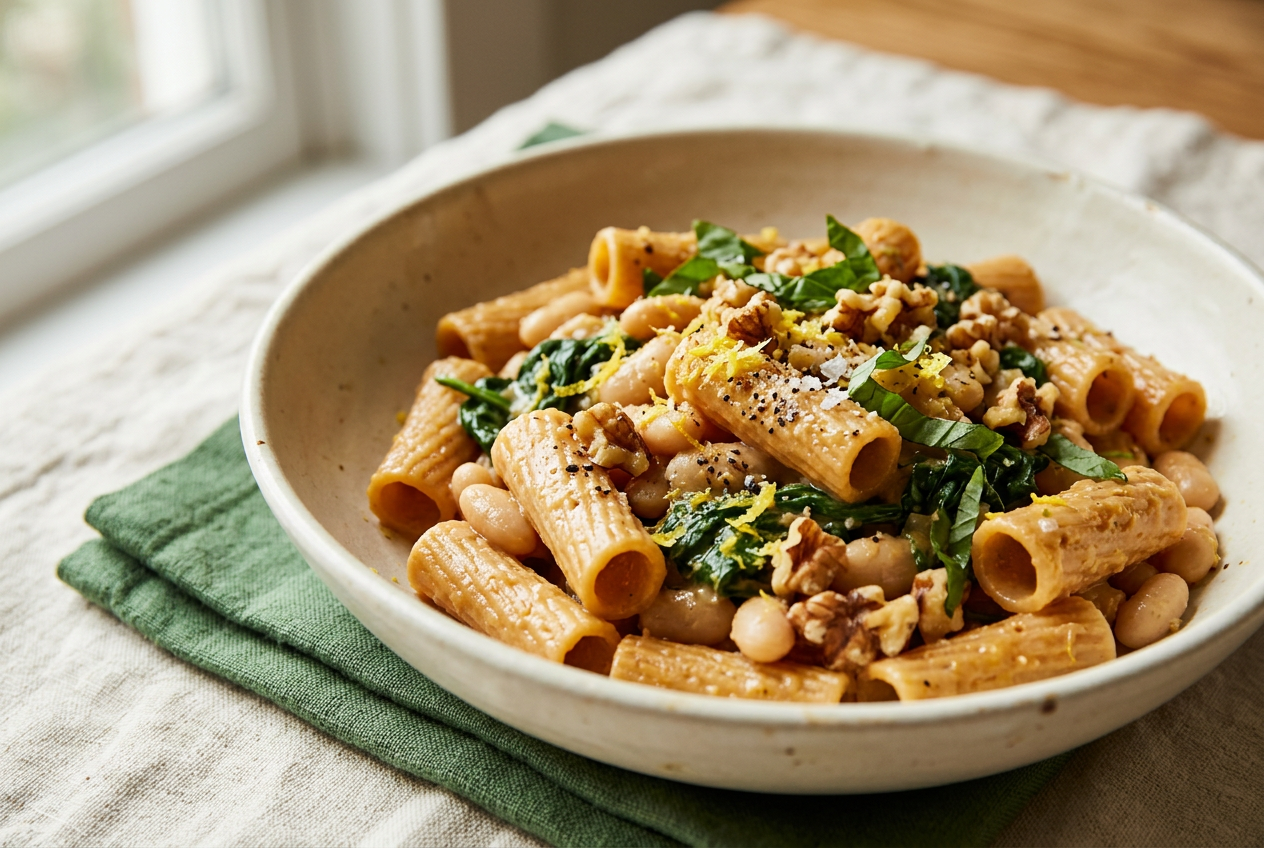
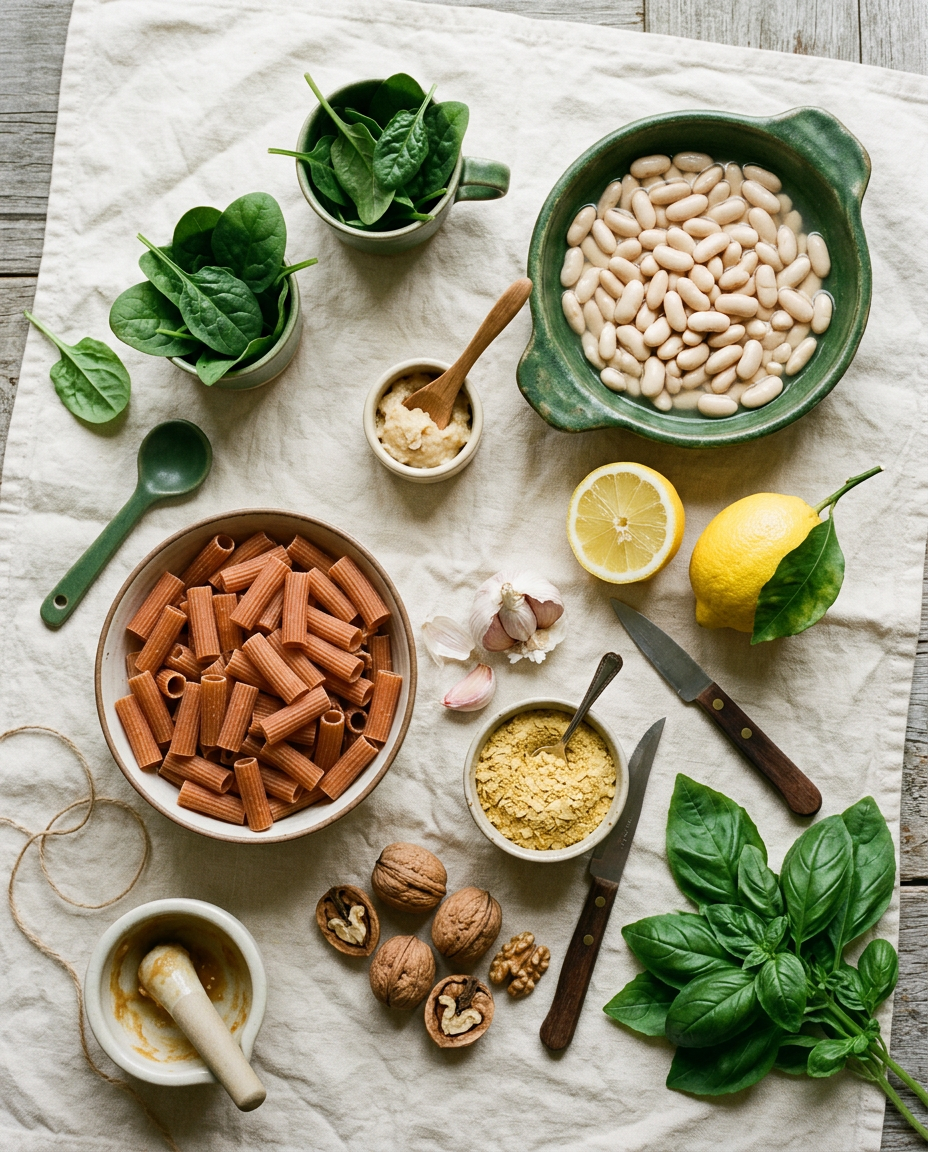
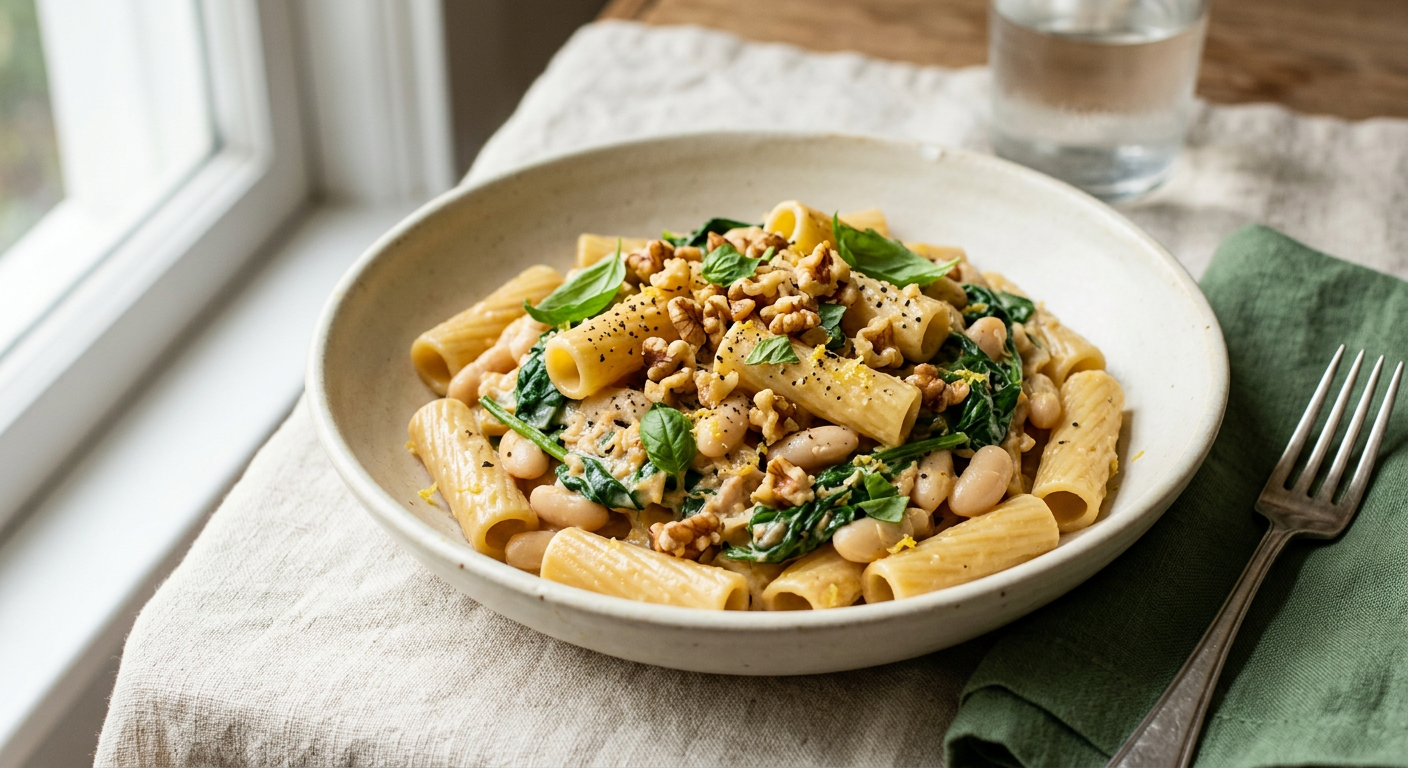
13. Creamy lemon-miso lentil pasta — 32 g protein, 30 minutes. Red lentil pasta, cannellini beans and spinach meet a glossy sauce of white miso, lemon and nutritional yeast. The complete recipe appears below.
14. Green pea pesto chickpea pasta — 30 g protein, 20 minutes. Blend thawed peas with basil, pumpkin seeds, lemon and nutritional yeast. Toss with chickpea fusilli off the heat so the bright green sauce stays fresh.
15. Mushroom TVP stroganoff — 36 g protein, 35 minutes. Soak textured vegetable protein in hot stock while browning mushrooms in batches. Finish with mustard, paprika and unsweetened cashew cream; serve over whole-wheat tagliatelle.
16. Sesame soba with tofu and edamame — 33 g protein, 25 minutes. Rinse cooked soba briefly to remove excess starch, then toss with baked tofu, edamame, carrots and sesame-miso dressing. It works warm or at room temperature.
17. Red lentil lasagne with tofu ricotta — 34 g protein, 70 minutes. Layer whole-wheat lasagne with red lentil tomato sauce and tofu blended with lemon, nutritional yeast and herbs. Rest for 15 minutes before cutting so the layers settle.
Bowls, curries and skillets for busy evenings
18. Gochujang tempeh rice bowls — 32 g protein, 30 minutes. Sear tempeh strips, glaze with gochujang, tamari and rice vinegar, then serve with brown rice, steamed broccoli and cucumber. Sesame seeds provide crunch rather than doing the nutritional heavy lifting.
19. Moroccan chickpea and quinoa tagine — 24 g protein, 45 minutes. Simmer chickpeas, quinoa, courgette and apricots with cumin, cinnamon and preserved lemon. Add toasted almonds just before serving so they remain crisp.
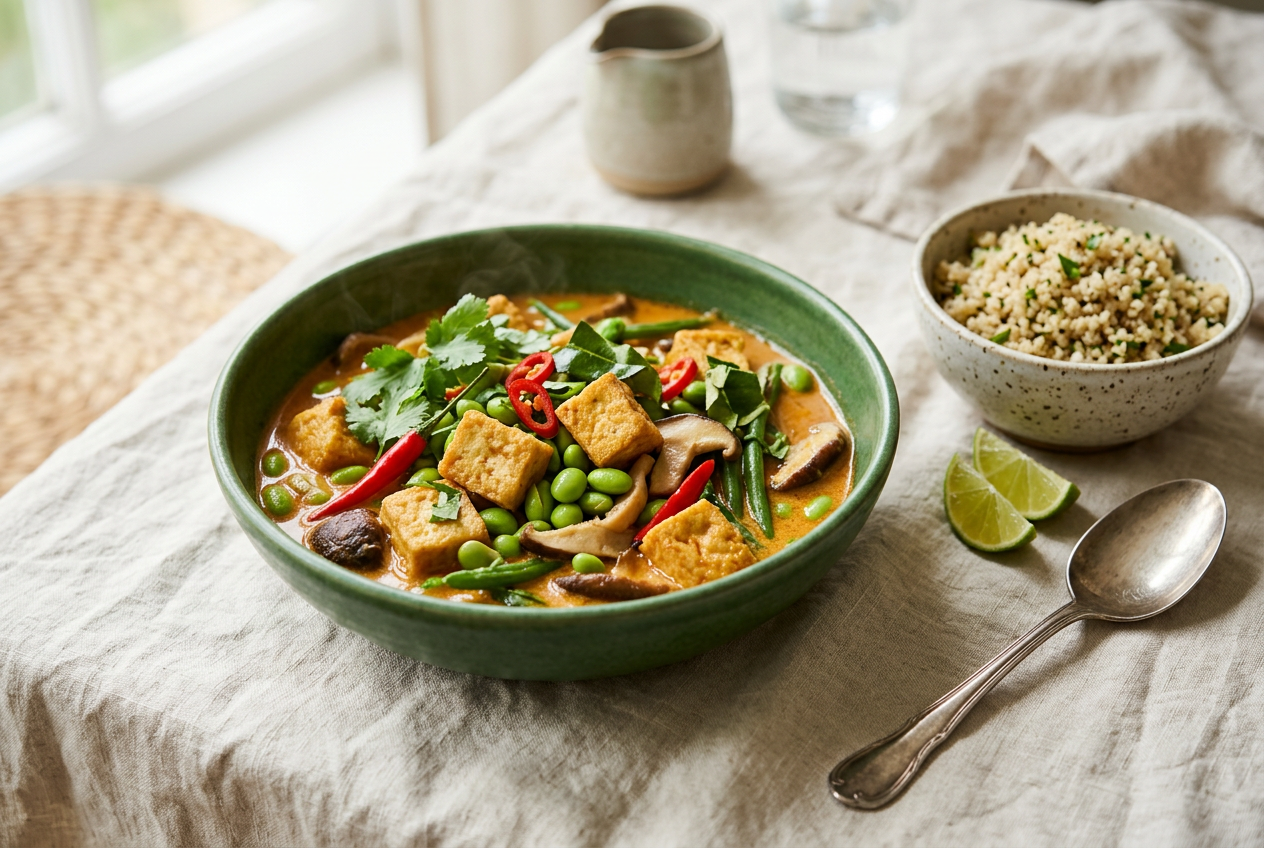
20. Thai red curry with tofu and edamame — 35 g protein, 30 minutes. Fry curry paste until aromatic before pouring in coconut milk. Add tofu, mushrooms and fine beans, then edamame near the end. Finish with lime rather than simmering it.
21. Cajun red beans with quinoa — 25 g protein, 45 minutes. Cook onion, celery and pepper until properly soft, then add kidney beans, tomatoes and Cajun spices. Partly mash the beans to create a creamy base without dairy.
22. Mediterranean seitan skillet — 39 g protein, 25 minutes. Brown seitan with oregano and garlic, then add cherry tomatoes, artichokes, white beans and spinach. Lemon and parsley keep the concentrated savoury flavours in balance.
Freezer-friendly comfort dinners
23. Three-bean chilli with quinoa — 27 g protein, 45 minutes. Combine black beans, kidney beans and pinto beans with quinoa, fire-roasted tomatoes and cocoa. Simmer uncovered for the final 10 minutes so it becomes spoonably thick.
24. Split pea and smoked tofu soup — 30 g protein, 60 minutes. Sweat leek, carrot and celery, then simmer split peas until velvety. Fold in crisp cubes of smoked tofu at serving time, or freeze them separately to preserve their texture.
25. Lentil, chickpea and aubergine moussaka — 28 g protein, 75 minutes. Roast aubergine rather than frying it, layer with a cinnamon-scented lentil and chickpea ragù, then top with a white bean béchamel. Cool for 15 minutes before slicing.
Chilli and split pea soup can be frozen for up to 3 months in airtight containers. Moussaka freezes best in individual portions. Cool cooked food promptly, refrigerate within 2 hours and reheat until piping hot throughout.
How to plan, serve and store these dinners
For a balanced week, avoid scheduling five bean stews in succession. Pair one pasta night with a tofu tray bake, a fresh grain bowl, a curry and a freezer meal. The variety improves texture, flavour and the range of legumes, grains, vegetables, nuts and seeds on the menu.
A practical five-night plan
- Monday: crispy tofu, edamame and quinoa bowls.
- Tuesday: red lentil and walnut bolognese.
- Wednesday: butter bean puttanesca with grilled sourdough.
- Thursday: Thai red curry with tofu and edamame.
- Friday: three-bean chilli from the freezer.
Most cooked dinners keep for 3–4 days in a refrigerator maintained at 4°C or below. Store sauces separately from crisp vegetables and toasted toppings. Legume pasta is best within 2 days; loosen it with water while reheating. Grain bowls can be assembled for 3 days, but add cucumber, herbs and dressings shortly before serving.
To increase protein without making the portion unwieldy, add edamame, hemp seeds, nutritional yeast, white beans blended into a sauce, or a side of seasoned lentils. For lower-calorie high-protein vegan dinners, favour tofu, seitan, edamame and legumes with abundant non-starchy vegetables, and measure rich coconut, nut and seed sauces rather than omitting them entirely.
Creamy lemon-miso lentil pasta with white beans
Ingredients
- 300 g red lentil rigatoni or penne
- 1 tablespoon extra-virgin olive oil
- 3 garlic cloves, finely sliced
- 1 x 400 g can cannellini beans, drained and rinsed
- 120 g baby spinach
- 2 tablespoons white miso
- 3 tablespoons nutritional yeast
- 1 teaspoon Dijon mustard
- 1 lemon, finely zested and juiced
- 180–240 ml reserved pasta water
- 30 g walnuts, toasted and roughly chopped
- 15 g basil leaves, torn
- Freshly ground black pepper
- Sea salt, as needed
Method
- Bring a large pot of well-salted water to a boil. Cook the lentil pasta until just al dente, checking it 2 minutes before the packet time because legume pasta softens quickly. Reserve 300 ml pasta water, then drain.
- Warm the olive oil in a wide sauté pan over medium-low heat. Add the garlic and cook for 60–90 seconds until fragrant but not browned.
- Add the cannellini beans and 120 ml pasta water. Simmer for 3 minutes, then lightly crush about one-third of the beans with the back of a spoon to give the sauce body.
- Whisk the miso, nutritional yeast, mustard, lemon zest, half the lemon juice and 60 ml pasta water in a small bowl. Lower the heat before adding this mixture so the miso remains mellow rather than catching.
- Add the drained pasta and spinach to the pan. Toss for 1–2 minutes, adding enough remaining pasta water to produce a glossy sauce that loosely coats each piece. The sauce will thicken as it stands.
- Season with black pepper and more lemon juice. Taste before adding salt because miso and pasta water are already seasoned. Divide among bowls and finish with walnuts and basil.
Nutrition (per serving)
- Calories Approximately 570 kcal
- Protein Approximately 32 g
- Carbohydrates Approximately 87 g
- Fibre Approximately 18 g
- Fat Approximately 13 g
- Sodium Approximately 690 mg
Cooking tips
- Choose a red lentil pasta with at least 20 grams of protein per 100 grams for the estimated nutrition to remain comparable.
- Keep the sauce slightly looser than seems necessary; legume pasta absorbs liquid rapidly after draining.
- For a nut-free finish, replace walnuts with toasted pumpkin seeds.
- Reheat gently with a splash of water. High heat can split the sauce and make the pasta brittle.
Frequently asked questions
What vegan dinner has the most protein?
Seitan-based meals are often among the highest-protein vegan dinners because seitan can provide roughly 20–25 grams of protein per 100 grams. A seitan stir-fry with edamame and brown rice can reach about 40 grams per serving. Tofu, tempeh, lentil pasta and textured vegetable protein can also support dinners in the 30–40 gram range.
How can I get 30 grams of protein in a vegan meal?
Pair two or three substantial sources. For example, combine 150 grams of tofu with one cup of edamame and a serving of quinoa, or use lentil pasta with white beans and nutritional yeast. You do not need protein powder; ordinary foods can readily produce a balanced dinner with around 30 grams of protein.
What are the best high-protein foods for vegans?
Useful choices include seitan, tempeh, tofu, edamame, textured vegetable protein, lentils, beans, peas, chickpea or lentil pasta, quinoa, hemp seeds and nutritional yeast. Soy foods and seitan are particularly concentrated, while legumes add protein alongside fibre and minerals.
How can vegans get 100 grams of protein a day?
Spread protein across meals and snacks rather than concentrating it at dinner. Three meals containing roughly 25–30 grams, plus a snack with 10–20 grams, can reach about 100 grams. Individual needs differ, so athletes or anyone with a medical condition may benefit from advice from a registered dietitian.
Is tofu or lentils higher in protein?
Firm tofu is generally more protein-dense by weight: 100 grams commonly provides about 12–17 grams, while 100 grams of cooked lentils supplies around 9 grams. Lentils contribute more fibre, however, and both are valuable. Exact values vary by product and preparation.
How do you make a vegan meal more filling?
Build the meal around protein and fibre, then add volume, texture and moderate fat. Beans with whole grains, tofu with vegetables, or lentil pasta with a seed-based sauce tend to satisfy better than vegetables and refined grains alone. Chewy toppings, a sharp dressing and generous seasoning also make a meal feel complete.
For a more structured week of plant-based cooking: the PlantedAndSimple digital cookbook brings together protein-conscious recipes, practical prep notes and calm, ingredient-led meal planning. Browse the cookbooks.
Final thoughts
A satisfying vegan dinner rarely depends on one heroic ingredient. The most dependable formula combines a concentrated protein such as tofu, tempeh, seitan or textured vegetable protein with legumes, whole grains, vegetables and a sauce carrying enough acidity, salt and richness to bind the plate together.
Use these 25 ideas as a flexible dinner framework rather than a rigid plan. Start with the recipes that suit your week, repeat the components you enjoy and keep one freezer-friendly option ready for evenings when cooking needs to be especially simple.
Experiment variants used: editorial guide structure; finished-dish-and-ingredient-story pins; sensory editorial headline; wider table-scene imagery; publish at 4:30 p.m. in the primary audience time zone.